
You’ve just booked your holiday in Corsica and one question is already on your mind: what are we going to eat there? Good news — the answer fits in a few words: charcuterie that has spent months drying in the maquis, sheep’s cheese that tastes of the mountains, a glass of wine you won’t find anywhere else, and chestnut-flour treats that exist only here. Here at U Casone, we believe that discovering Corsican food is as much a part of the trip as the beach or a hike. So here, without beating about the bush, are the specialities you simply must try during your stay.
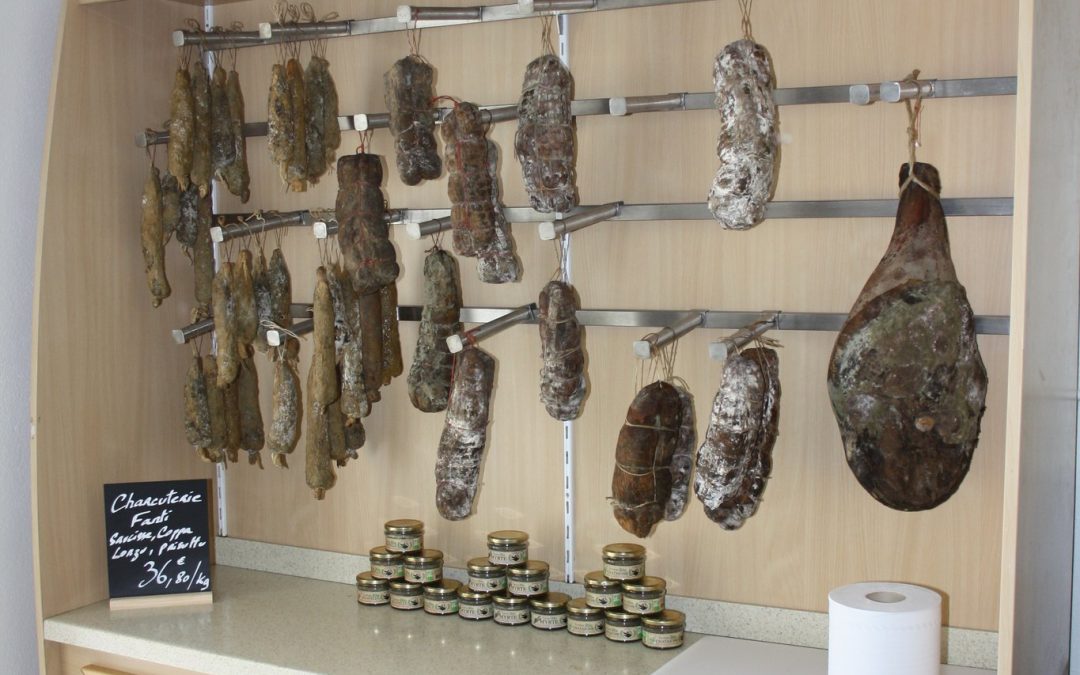
Corsican charcuterie, your first real taste of the island
If you were to remember just one thing about Corsican cuisine, it would probably be this: here, the pig is king — and not just any pig. The porcinu nustrale, a local breed raised semi-free in the maquis and chestnut groves, feeds on acorns, chestnuts and wild herbs. The result is meat with a bold, almost gamey flavour that gives rise to charcuterie unlike any other in France.
Coppa, lonzu, figatellu: the trio to know
Coppa, cut from the neck and shoulder, is best enjoyed very thinly sliced, almost translucent, to reveal all its melting fat. Lonzu comes from the loin and is leaner, more delicate in the mouth. And then there’s figatellu, probably the most Corsican of the three: a liver sausage, grilled or pan-fried, traditionally served with chestnut purée or white beans. In winter it’s eaten fresh and grilled; in summer, you’re more likely to find it dried and sliced as an aperitif.
💡 U Casone tip: to taste genuine farm-made charcuterie rather than an industrial version, head for small delis and farmers’ markets rather than the supermarket shelves along the coast. The Ghisonaccia market, very close to the campsite, regularly brings together local producers selling direct.
Corsican cheese, a story of sheep and maquis
Corsica is a pastoral land, and its cheese tells that story better than any speech. Brocciu (pronounced “brotch”), made from sheep’s or goat’s whey, is probably the island’s most emblematic product. Fresh, almost creamy and lightly salted, it’s eaten plain by the spoonful, sweetened with a little honey, or added to savoury dishes such as cannelloni with brocciu and mint, a Corsican classic.
Alongside brocciu, Corsican tomme — more matured, with a stronger flavour — is similar to Pyrenean sheep’s cheeses, with an extra touch of maquis that comes from the animals’ grazing. Some cheeses matured for several months develop a strong, almost peppery character: they’re often saved for the end of the meal, with a little fig or myrtle jam.
Corsican wine: much more than a holiday rosé
Many visitors discover, almost by chance, that Corsica produces wines with real personality, far from the cliché of beach rosé. The island has nine appellations and grape varieties you’ll hardly find anywhere else: nielluccio and sciaccarellu for reds and rosés, vermentinu for whites. On the east coast, not far from Ghisonaccia, several estates produce sunnier wines from the plain, to be discovered directly at the winemaker’s.
If dry wine isn’t your thing, try a Muscat du Cap Corse at the end of the meal: a fragrant, naturally sweet wine, to be enjoyed well chilled with a mature cheese or a chestnut-based dessert. It’s often the little glass that rounds off a summer evening best.
Corsican sweet treats: chestnuts and honey above all
The chestnut holds a special place in Corsican cooking, especially in the Castagniccia, the historic heartland of the chestnut groves. Ground into flour, it’s used to make soft fritters, pancakes and above all pulenda, a chestnut polenta that once accompanied shepherds’ everyday meals. Today, you’re more likely to find it as a dessert or side dish, with a touch of brocciu.
Fiadone, the Corsican dessert par excellence
If you only try one dessert during your stay, make it fiadone. This brocciu cake, flavoured with lemon or myrtle brandy, is like a dense, fragrant flan. Every Corsican family has its own jealously guarded recipe, and you’ll come across a different version at every table you visit. It’s simple, but devilishly good — especially shared at the end of a meal with a view of the sea.
Corsican honey is also well worth trying: it has PDO status and comes in different varieties depending on the season and the flowers — spring, maquis, chestnut grove or honeydew. Each has a very different taste, from the most delicate to the strongest and most resinous. You’ll find it easily at producers’ and local markets, in little jars that are perfect for taking home in your suitcase.
📍 Did you know? Canistrelli, the little dry Corsican biscuits made with white wine, aniseed, lemon or almonds, keep for weeks. They’re the easiest foodie souvenir to take home, and children love them as an afternoon snack.
Where to try these specialities from U Casone
There’s no need to travel the whole island to discover all this: the east coast and the area around Ghisonaccia are full of opportunities to eat well, never too far from the campsite.
Ghisonaccia market
A few minutes from the campsite, it brings together local charcuterie makers, cheesemakers and market gardeners. The ideal place to put together a 100% Corsican picnic before heading off to the beach.
Delis on the eastern plain
Farm-made charcuterie, mature cheeses, regional wines and honey from the producer: several shops around Ghisonaccia offer a serious selection, along with advice to help you choose.
Our restaurant and pizzeria
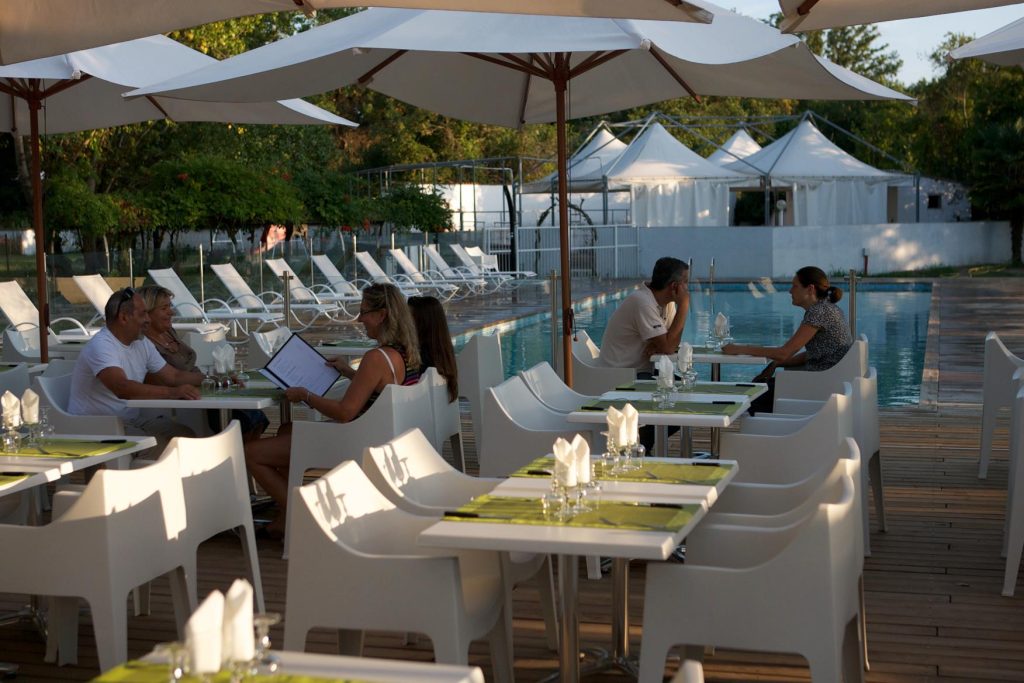
At the campsite, our restaurant offers a menu that showcases local produce, plus a themed evening every week in season. Our pizzeria, with its electric oven, delights young and old alike without leaving the campsite.
Our snack bar and mini-market
For simpler cravings, the snack bar has you covered at any time, and the mini-market lets you pick up a few Corsican products to pop in the cool box of your mobile home or chalet.
Putting together a Corsican aperitif to share on the terrace
One of the easiest ways to discover these specialities on holiday is to prepare a Corsican aperitif one evening, on the terrace of your safari tent or lodge, or outside your mobile home. You don’t need to be an expert: a board of charcuterie with a little coppa, lonzu and dried figatellu, a piece of tomme and some fresh brocciu, a few seasonal figs, a handful of canistrelli and a glass of well-chilled white wine are all it takes to recreate a real Corsican table. Add a little maquis honey to go with the cheese, and you have a simple but memorable moment, with the cicadas singing in the background and the scent of the pines gently rising as the evening cools.
It’s also a great way to get the children involved: have them guess the cheeses with their eyes closed, compare the taste of two different honeys, or choose their own favourite canistrelli at the market. Corsican food lends itself well to this kind of little family game, far from formal meals, and it often leaves a memory as strong as the beach or the day’s swim.
A few pointers for choosing well at the stalls
At a market or a producer’s, a few simple pointers will help you find your way. Truly farm-made charcuterie often carries a “porcinu nustrale” label or states the specific village it comes from; be wary of prices that are too low, almost always a sign of industrial charcuterie imported from the mainland. For cheese, don’t hesitate to ask for a taste before buying: Corsican producers are used to offering samples, and it’s often a chance to chat a little about their craft. For wine, a wine merchant or the local tourist office can always point you towards an estate to visit during the day, between swims.
Five specialities not to be missed
- Grilled figatellu — the liver sausage that sums up Corsican charcuterie all on its own.
- Brocciu — plain, sweetened with honey, or in cannelloni with mint.
- Fiadone — the brocciu and lemon dessert that every family makes its own way.
- A glass of Muscat du Cap Corse — to end a summer meal on a sweet note.
- Canistrelli — the dry biscuit you nibble all day long and take home in your suitcase.
What to discover in each season
May and June
The markets get back into their rhythm, the spring honey is just arriving, and restaurants are still quiet: the perfect time to take a moment to chat with the producers.
July and August
High season: lively markets, restaurants and pizzerias in full swing, themed evenings at the campsite and a wide variety of summer produce such as figs and fresh brocciu.
September
Chestnut-grove honey and the first chestnuts start to appear, the light is softer, and it’s often the best time to wander round the markets without the summer crowds.
When all is said and done, Corsican food is a lot like the island itself: generous, unfussy and deeply rooted in its land. A good slice of coppa, a little brocciu, a glass of wine from the eastern plain, and there you have it — you’ll have tasted the essentials. The rest we’ll leave you to discover for yourself, between swims and a siesta in the shade of the pines.
Fancy tasting authentic Corsica from a base camp 700 metres from the sea? Come and unpack at Camping U Casone, in Ghisonaccia.